Showing posts with label editorial. Show all posts

Monday, January 12, 2009

Utilizing Hercules RMX w/ Grooveboxes to expand Live Performance

0 comments

A couple of days ago I blogged about the recently released Hercules Steel DJ controller. What I failed to blog about was the also released and perhaps even cooler Hercules RMX. It features all of the build quality and surface buttons of the Steel, but offers a 2in/2out USB interface as well. One LivePA.org member has recently purchased one and has put it to good use in expanding his LivePA setup. Lets here how he is using it.


Quote from MagpieIndustries:

How are you utilizing the Hercules RMX into your setup?

I am experimenting with the following. I take my grooveboxes [Korg ESX-1 and EMX-1] and jam for a while until I have some nice patterns with variations going on. Next, I record some medium length sequences (anything from a few bars to a full song) straight into my computer in two layers, usually drums and bassline, and everything else. While recording, I make sure to have intros and outros and some sections that are quite minimal. Next, I take my Hercules RMX and Traktor, and play these recordings back. While playing, I add in a whole load of cue points, and I have the DJ controller set up so I can hop between these cue points, apply effects, loop different parts and do beat juggling tricks etc. I can even have both my Electribes going directly into Traktor through the RMX as it is a two-stereo in/out soundcard, and keep midi sync with Traktor. The RMX is my key from getting out of groovebox jamming mode and into longer arrangements. I'm slowly getting some DJ tricks together for transitioning between parts. It's realtime arrangement while still having that jamming feeling going on and it's showing a lot of promise.

What are some of the advantages to the Hercules RMX and what are  your thoughts on it?

I LOVE my Hercules RMX. It's solid and heavy, and rugged enough to take out to milder parties without fears. It is completely usb bus powered, so no extra wall wart needed which is fantastic. If you want to go out to a cafe or friends house its just stuff it and a laptop in the bag (it comes with a bag) and go. Awesome!!  It's also a four channel (two stereo pairs) soundcard, so you can cue up stuff in your headphones, and best of all it also has two stereo inputs. Audio quality is pretty good. I'm  not  an experienced DJ so I can't really compare the feel of the crossfader and pitches with other gear, but for me it works just as I expected and I have very few complaints.

What are some negatives regarding the Hercules RMX and its setup?
Now onto the negatives. The buttons are a tad stiff and travel quite a distance before making contact, something that detracts from the feel, but not terribly so. You might think from the photos that all the buttons light up, but this is not the case, the EQ kill switches for instance are disappointingly without illumination. The jog wheels are great for zipping back and forth in a track, or to scroll up and down in a list of tracks, but if you want to do scratching go get some vinyl. Same probably goes for beatmatching, although this is controversial. I just press Sync and have Traktor beatmatch everything, if you consider that cheating then fine, I'm too busy doing a hundred other things to worry about being a purist. It's digital djing after all, so focus on the cue and loop point juggling tricks rather than beatmatching.
One thing I miss is some way to have an effect send level. The Torq Xponent has four knobs per deck just for effects, which is much nicer, and with the jogwheels at the back (smart for digital dj priorities I think), but the xponent is very plastic and doesnt have the audio inputs, and is way more expensive. There are enough buttons on it to have several Shift modifiers set up, and I've been experimenting with mapping and remapping the EQ knobs and switches to also work as effects sends and levels, still need to find a layout that works best.


It's crashed my macbook a couple of times, but always exactly when I connect it to the usb port. A reboot solves this. Once it's successfully connected it remains working.


In terms of its competition it's kicking major ass. A possible alternative is the Vestax VCI-100 which is very popular, and apparently a bit better for scratching and beatmatching. Not a soundcard though. The Torq Xponent has the smartest controlset of them all IMHO but without audio in it's no good [for LivePA]. I've heard the faders on it are featherlight, your sleeve can accidently knock the pitch way off, and the overall feel is very plasticy. The new Vestax VCI-300 is definitely the sexiest looking of the bunch, with high resolution jog wheels and inbuilt sound, but it's over twice the price and also lacks some dedicated knobs for effects. If you are after sheer bang for the buck, then I don't think there is any competition whatsoever.


I'd like to also mention a bit about Traktor Pro, which has quite a different workflow to it than sequencing in Ableton Live, but it's clear that both programs are slowly converging on a similar solution. Ableton offers a great method for testing out how different loops and clips work together, but personally I just got lost in a mass of clips and find it difficult to sequence my way into a decent performance. Traktor leans more towards an arrangement style, don't forget that it is a dedicated tool designed purely for creating long live sets. There is no reason to stick to playing finished mp3s. It doesn't have the editing features of ableton, not by a long shot, but it's designed to work at a slightly higher level than that. It's awesome for layering, looping and blending loops and minimal tracks. I tend to have two decks with premade tracks playing, and two decks for the electribes (which I usually leave just playing right through). It's possible to record the master output as a wav and load it in a deck without much fuss. Traktor Pro also finally added midi slave functionality, and is far smoother for looping than previous versions. Finally, when you get sick of jamming and making live sets, you can just chill out and DJ some tunes together.

Overall he has a very interesting concept going on. I know more than one LivePA artist who feels like Ableton Live may be overkill for their needs or is instead too cumbersome for the quick edits needed on the spot. This is a great example on the whole though of the convergence of not only the DJ and LivePA worlds, but also how Ableton Live is not the only game in town with regards to software for LivePA.

Thursday, January 08, 2009

New Apple Macbook Pro 17”: The Battery is Not the Real Concern!!!!

2 comments

features17-display20090106

Yesterday Apple had their last Macworld address and while the releases were moderately interesting, one of the most controversial  is perhaps the announcement regarding the non-removable battery for the newly announce 17” Macbook Pro. Now, I don’t imagine too many livePA artists are using 17” Pros to do their live performances because lets be honest, the things are huge. But this non-removable battery could very well be setting a design standard that we will all see trickle down into the 15” and 13” models come the next revision.

So in this new Macbook, Apple is claiming to have developed a super long batter that lasts up to eight hours and can have over 1000 charge cycles. Interesting, but I think we all honestly can admit that the real world charge life will last probably around 50%-70% of that claimed by Apple. So, 4-6 hours roughly. While the main crux of this debate and disappointment from many people comes down to the fact that business users cannot change batteries when on a long flight and so forth, I think there is a much bigger and more important issue here that most people are failing to discuss. That issue is of course the lack of accessibility to the internals of the machine itself now.

I personally have never once considered purchasing a second battery for my Macbook and I imagine the vast majority of laptop users out there, even “Pro” users are in the same boat. What I have done though is wanted to upgrade my Macbook as it grew older. Install a new harddrive with a higher RPM, add more RAM, etc.  And while the new 17” Macbook comes packed with a nice 320 GB harddrive and 4GB of ram, this is certainly not the max of what it can handle. A few years down the road even, the cost of putting in a 1TB drive may only be $100, who knows. What Apple has done here though is effectively remove the personal upgrade options of the laptop from the user. No longer can someone really extend the life of their machine an extra few years by adding a bigger, faster harddrive or more RAM. You are now forced to either purchase a new machine or pay the exorbitant amount of extra cost to have the upgrade done at purchase.  We all know that PC manufacturers charge an “arm and a leg” for harddrive and RAM upgrades at purchase.

The upgrade from 4GB of DDR3 Ram on the Macbook Pro 17” to 8GB of RAM costs a whopping $1,200!!!!!!! Admitingly, DDR3 ram is newer to the market and I could not find 2x4GB sticks for sale at either Newegg.com or TigerDirect.com at the time of this writing, but comparable RAM from both of those sites in 2x2GB configurations runs $200 at the most.

This is a slippery slope that Apple has begun to go down with regards to its customers. It is fairly easy to argue that the consumer market either doesn’t care or doesn’t notice these sorts of things, but I for one would like to think that the “Pro” market that all of us as musicians fall into are much more critical and demanding of our hardware.

via Orju.net

Wednesday, May 21, 2008

Leveraging Your Online Presence

2 comments

Well, I really have been sort of on this online presence and community thing as of late. It is probably due to the fact that I really don't have the time to invest in performing live all that often anymore and I am looking for different avenues to present my music. Online communities (artist or otherwise), music distribution sites and so forth have at the moment become something I have wanted to focus a little bit more attention on. It is a topic that is often talked about briefly but never really discussed deeply. There are so many numerous websites out there that the whole process can be overwhelming. I myself for instance previously went with the approach of getting my music onto as many of these websites as possible to get to as many ears as possible. I have no idea of this approach really worked or not but in the end I inevitably found that I only had the time to concentrate on a couple of websites. For me those ended up being Soundclick.com and to some extent Myspace. I as everyone else jumped onto the Myspace bandwagon when the rush was happening and had quite a bit of traffic on the page....for a while. Now with most all of these websites I have seen traffic dip significantly over the past year. In part due to me not keeping up with the site and in part due to the just lower traffic I think. In that time since I have moved onto numerous other social sites to try to promote myself. Virb, Last.FM and many others that I honestly can't even remember.


It makes you sort of wonder though how is the best way to approach this whole online process. On the one hand you want to get in on the ground floor to any site while it is starting. I personally have the strong opinion that in some of the bigger sites it is way too easy to get lost in the crowd. If one joined Myspace today would they even get hits without having some sort of method to channel people to the site? It certainly is too big for the sort of stumbling around method that it had a couple of years ago. On the other site of the fence you are in the same boat of perhaps diluting your time and resources too thinly. Who is to say how much of a user base or traffic these pages are ultimately going to get. Virb is an excellent example of this. The site is great, the flexibility is awesome and there are a few artists on there who are getting hits. Ultimately though I find by browsing through their pages that almost everyone there who is not on the front page has less than 100 song listens and very few friends. It just doesn't have the critical mass to make it appealing in some sense. Do you hang on and hope it pops or let it go?


As I mentioned before I have always taken the shotgun approach in the past to these pages, but perhaps a more focused approach to alternative promotion sites is a better way to approach the entire thing. Lets face it. Myspace for example has a ton of problems with it. When all is said and done it is a recognizable brand like Youtube. Putting that link on your business card or flyer is a pretty much sure way to get some hits and people are familiar with it. 


Ultimately though I am curious as to what other live musicians are doing. Are there any sites that are really hitting your interest right now? Is Myspace still your staple despite its recent slow down in growth? Did you take the shotgun approach much as I have or are you focusing your listeners to a couple of sites?


I would love to hear from what people have found successful.

Tuesday, May 06, 2008

Electronic Music Production Communities

5 comments

This is just a post out to the reader base. Does anyone have any good recommendations for some electronic music communities? As I have mentioned previous on the blog here I am in a sort of funk phase of production at the moment and that may partly be due to the fact that my participation level with other artists online and offline has really fallen off in the past couple of years. This has been doubled by the fact that the two most popular forums that I visited (Samplecity.net and Serious-Sounds.net) are either now gone or not really active anymore.

Now I have made my rounds to the usual suspects: Future-Producers, IDMForums, EM411, Garageband, Sectionz. I am just not getting all that much of a good vibe from any of them. They either come off as too large and too full of wankers spamming their links and never posting real discussions, or as overly pretentious focusing too much on one particular style of music or concept of production. Sectionz for example seems full of FL Studio users who have the same animated attitude towards software as MS and Apple fanboys do to their computer.

So I am sort of on the hunt to look for a good artist community to bounce ideas off of, see what is happening in the latest circles and so forth. There is of course the LivePA.org forums and I am not forgetting those, but I think I am looking for a general user community to just listen to other's music on and may be avoid the pretentiousness, wankery, posturing and so forth that I see on so many other sites.

May be on a side note if no one has any suggestions what sort of stuff would you like to see in a music community for fellow artists?

Tuesday, April 29, 2008

Kraftwerk: The Best & Worst LivePA I have seen

7 comments


On April 21st I had the opportunity to see Kraftwerk, the legendary German electronic group that has pioneered so much for electronic music. They are doing a small US tour and just happened to be in Milwaukee. I figured when is the next time I am going to see these guys, they might retire at anytime. So I paid my $30 ($50 after Ticketmaster fees) and made the drive up from Chicago.

Now as my post title sort of indicates, this show was great, but also at the same time horrible. We have discussed on this blog and over there many avenues the issues surrounding LivePA. One of the most common issues that always come up in discussions is the laptop debate. Along with that is the artist who just sits there staring at their laptop through and entire show. That is exactly what Kraftwerk did. Stared at their laptops, all four of them and didn’t move. Now I know this is sort of their schtick, and in many respects many of the stereotypes of electronic music and musicians have been formed based off of Kraftwerk, but seeing them really do this in person is a rather unnerving experience. You can also see the crowd not knowing exactly what they should be doing during the music because of the stiffness of the artists on stage. At only a few points throughout the entire show did I see anyone really get dancing.

Overall though I don’t want to totally rag on the show. The music was very tight and well done. The visuals were spot on and I can only speculate that one of the four on stage was controlling the visuals. This tightness in their set however leads me to believe that they have a very choreographed performance, with little room for improvisation. Are they checking their email on state? I can’t tell. Heck, I can barely tell that the performers are still alive.

When all said and done though the show was an ejoyable with a very tight set (maybe too tight) and great visuals. Worth the effort for the rare opportunity to see them in the U.S.

Monday, April 28, 2008

Hifana: Fresh Push Breakin'

3 comments


The incomparable breakbeat duo Hifana, proving that livePA-style performance isn't just for nerdy obscure basement producers like myself.

Over the past few years the waves they have created have spread beyond the borders of their native Japan, rippling across the world and gaining strength as they go. Their genre-bending mix of live percussion, crisp sampler-driven breakbeats, and turntablism incorporate everything from robot voices to traditional Japanese music, creating a blend that is exotic while still danceworthy, approachable and groovy enough for a casual listener while clever and complex enough for more discerning audiences. While the video is a professionally produced music video rather than a recording of a live performance, the reason I posted it here is to show that the art of livePA is slowly but surely working its way into the public mindset and gaining mass appeal. Bonus points go to anyone who can tell me what the electronic hand drum instrument is called.

Thursday, April 10, 2008

The Past Gets Futuristic Again: Atari STeem and Dr.T's KCS

1 comments

The Past Gets Futuristic Again: Atari STeem and Dr.T's KCS
Photobucket
Here we explore the nebulous place where the cutting edge meets low-tech minimalism.

In 1987, the Atari 1040 hit the market, sporting an 8mhz processor and a then unheard-of 4 megabytes of RAM. Its integrated MIDI ports made it a contender against the other popular music computer of the time, the Commodore 64, and the operating system (called TOS, which stands for... The Operating System) was so microscopically small that it fit onto a single chip, making a hard drive optional. Much of the MIDI software written for this no-frills skeleton of a system followed suit, offering stark, eye-gouging interfaces that were packed with cryptic but highly efficient functions often hidden in plain sight. Of these, C-Lab's Notator software reigned supreme, offering an amazing array of MIDI editing the likes of which I have never seen anywhere else.

My 1040ste unit has seen some hard times over the years of daily use. I've repaired it many times, gone through two monitors, and given it more than its fair share of pounding and overheating. Thankfully, the engineers at Atari were bright enough to encase most of the unit's internal components under removable metal shells. Nothing lasts forever, though, and each passing day of suspiciously flawless performance makes me wonder: how long will this machine last? It's nearly as old as I am, and replacement parts are hard to come by. If WHEN it bites the dust, the heart of my studio will be ripped out. So, I went searching for a modern solution.

Of the of Atari emulators I tested on my laptop (an HP Pavillion) the best was Atari STeem. Not only does it faithfully emulate any of the 1040 series, the software can also run much, much faster than the hardware unit, allowing virtual overclocking and RAM expansion up to an otherwise impossible 14mb. Unfortunately, the program also brings some stability issues to the table that were never present in the hardware unit, but with modest performance settings this are easily managed. Unfortunately, C-Lab Notator cannot run under STeem, because nobody has managed to emulate Notator's hardware lock. Consensus among Atari MIDI buffs says that it could theoretically be done, but it would technically be illegal, and also heinously difficult. As I am no Atari guru, I went in search of another solution to my MIDI needs.

The answer came in the form of Dr. Emile Tobenfeld's KCS Omega II software, a visionary MIDI editing suite completely unlike any other I have ever seen. The last official release was in 1993, but the software is easily had online at Tim's Atari Midi World. It is, as the documentation states a combination of several midi programs that work together under a multitasking environment called the Multi Program Environment, or MPE. Packed inside are programs like the Programmable Variation Generator, the TIGER graphical editor, a MIDI automation mixer, song mode, and a score editor. Each of these is complex and can be used as a program of its own, or in concert with the other programs. The main attraction for me is the Keyboard Controlled Sequencer for which the program is named. It runs in two modes, Open mode and Track mode. In Track mode, the program offers 48 MIDI tracks controlled with tape-style transport controls and a host of editing functions. Open mode allows the user to independently loop and playback 128 separate sequences via keyboard-mapped MIDI phrases, for a kind of live, hands-on approach to MIDI composition one might not expect from such an old program. That's right, it's an Atari sequencer that can be used live, quite possibly to great effect. Both modes offer extremely in-depth programming and a few unexpected functions.

Even better, STeem's MIDI faculties handled information to and from my MOTU Fastlane USB/MIDI box without any latency issues. In fact, setting up MIDI under STeem was far easier than under Reason, Cubase, Adobe Audition or any of the other modern software I use. The clock is solid and the stability is absolutely amazing, especially considering that Windows Vista can't get that kind of stability out of any other program. The KCS software's learning curve is somewhat steep, and could potentially throw off the modern user who has been spoiled by dumbed-down functionality and slick graphical interfaces. It is greatly worth learning, however, because the depth of MIDI programming capability offered by KCS is astounding.

Wednesday, March 05, 2008

The Great Gear Dilemma

5 comments

So I am sitting here now writing to the blog in one of those states that I can imagine every single one of the artists who read this blog has weighed in upon at least once before. That is the the writers block issue and also to some lesser extent the organization of your studio equipment. Now my philosophy for writing music is that I try to set a musical goal, style or objective for myself each year when writing my music. For example, this past year (2007) I strove to try to write more dance oriented music. Traditionally that has been very hard for me to get into and I have always been a more chillout/ambient type of artist. Now I think I accomplished that task fairly well, but unfortunately I now find myself sitting here trying to contemplate what my goal is for 2008 as a musician.

For the past three months I have literally sat down in front of my gear and gotten nothing worthwhile out of it. I have when all said and done, writers block. Now I have had writers block before in many instances but I have never really had it to the severity that I have it now. It is now almost mid-March and I have not even written a single four bar loop that I feel has been deserving of being saved. Everything just sort of comes out sounding generic or the same.

So this past week I have been really sort of thinking of how I can break this writers block and it sort of dawned upon me that perhaps what I need is really a change of scenery.  A change in musical gear.   Now I will be honest, I have never really gone through the process of changing around my musical gear, selling some of it off, purchasing new gear and in essence starting from scratch.  Moving from software to hardware is one thing because I quite honestly look at software as being disposable. Hardware on the other hand really feels like an investment and letting it go is going to be hard. To be quite frank, I find the idea more than a  little frightening, but perhaps it is exactly what I need to give myself a spur of new musical ideas. So that is the position that I find myself in today. Do I dare sell everything off and start from scratch?

This has also led me down a second path of dilemma's as well. If I do want to mix up the gear list a little bit what gear to I go out an purchase? What gear to I keep?  I myself have always sort of been a fan of the "workstation" pieces of equipment, but have I alluded to other approaches slightly in my post the other day regarding  SP-404 sampler.  I have since begun taking a look at everything from the Yamaha RS7000 and even the much under discussed Roland MC-808. Do  I stick with this workstation formula or instead begin building smaller pieces of kit focusing on standalone synthesizers, a smaller sampler and perhaps grooveboxes?  The whole process is just now getting more and more into the downward spiral as I weigh, analyze and scrutinize the endless possible combinations of gear setups that I could go with. This adding to the headache that I am not even 100% sure if I can stomach parting with the precious gear that I have spent the last 5+ years writing my music on and you can only imagine how numbing this process may turn out to be.   

So with this all laid out on the table, perhaps I am coming to the conclusion that my goal for 2008 is to rebuild, start from scratch and reboot.  I am curious as to what the readers may think. Have any of you out there ran into writers block as this? Have any of you dove off into the deep end of starting from scratch with your studio or live setups.  I would love to hear any thoughts or ideas people have to weigh in on this topic.

Monday, March 03, 2008

Why Can't Hardware Recorders and Mixers Keep Up?

3 comments

Every one of us who has been a musician or composer for the past ten years or so has seen and very likely participated in the rise of the software driven music environment. Software and the laptop has pretty much completely taken over music production in almost all aspects. With all of the convertors that are out there  are inevitably those, like myself, who just prefer using hardware. It may be the tactile working, it may be the ability to multi-task on equipment. Whatever the case may be even the hardware nuts like myself have still had the luxury of seeing most of our synthesizer and music production gear progress and evolve in parallel to the software world. That is except for the hardware recorders and the mixer industry.

I am not sure if you have really had an opportunity to look around at the mixer and harddisk recorder field as of late but if you compare the feature specs and the capabilities to any of the latest music interfaces on the market, they simply cannot compare. One of the most glaring deficiencies in both of these fields is the lack of stereo input channels and in general the lack of affordable multi-track recording.  Our software these days lets us record and mix unlimited tracks, IN STEREO that we can then pump out to the PA system generally for as low as a few hundred dollars, yet you would be hard pressed to find an analog or digital mixer even to this day that features more than four or five 1/4" paired stereo inputs for an affordable price.

Lets take a quick look at some of the most common mixers around and see where they stand.

Mackie 1202-VLZ3:   $300 a 12 Channel mixer that features only four channels (eight as mono) configurable for stereo. That means I can only plug in four synthesizers, samples, workstations in and have them feature stereo sound.

Yamaha MG166CX: $500 Sixteen channels again with only four configurable (again eight as mono) for stereo input.

Soundcraft EPM12:  $430   12 channels, none configurable as stereo.

The downfalls don't just seem to be there however. The recording platform equally has its shortcomings. If we look at a digital 8-12 track workstation in the likes of Tascam and so forth we will find that there are plenty of 8-12 track recorders available. However, again their flexibility comes up short with almost every single one featuring a lack of inputs and recording options. The Boss DR-1200 for example comes in at $895 and features only two track, mono simultaneous recording. The new Akai MPC5000 which comes in at $2500  only offers up to eight tracks and the powerhouse Korg D3200 at a price of $1300 only offers twelve mono tracks. Does it really cost that much more to run some analog circuitry for more inputs?

I suppose the run around to my point here is , why I can get such great innovation with the Elektron Monomachine, the Access Virus or the Waldorf Blofeld in the hardware arena, yet at the same time not even get evolutionary features such as the capability of receiving paired stereo 1/4" inputs on all of the available channels in a mixer?

Is it really too much to ask to just be able to plug in more than four pieces of gear as stereo using 1/4" unbalanced plugs?!?!?!

Tuesday, February 19, 2008

Micro Laptop Roundup

0 comments


Well it looks like we are out of the convention season and from that we have seen quite the round of micro-laptops coming out from different manufacturers.  Everything from the Asus eeePC to the OLPC it looks like micro-laptops are here to stay, and for the better I say.  Since we have there seems to be quite a few of these little laptops coming out on the market I think it might bet worthwhile to perhaps provide everyone with an overview of the features and specs between the laptops.  I have whipped up a little chart above comparing some of the features for each of the laptops. Some have better values over others, but overall I think they all have a unique perspective that they could bring to the table for Live artists.

As I have mentioned before, you are probably not going to be running Ableton Live on this platform, but some other software such as music programming languages, trackers or midi software might be perfect for them and since I am mentioning it I think I might as well list some of the software out there that I think could be useful for for performing or general music production

Music Programming Languages
ChucK
CSound
Pure Data
Bidule

Trackers
MilkyTracker
Renoise
CheeseTracker
Jeskola Buzz
Psycle
Modplug Tracker
Goattracker (8-bit Emulator)
Raster Music Tracker (8-bit Emulator)

Midi Software
IXI Software
SEQ24
Tutka
[ttrk] TekTracker
MidiOX

Well that is just a small taste of some of the software I think these machines might be useful for. I am sure all of the readers could come up with much more creative ideas themselves and I am sure you are all aware of software I have never heard of.

Tuesday, February 05, 2008

Sequential Circus 2: All livePA event review

2 comments

Show Review: Sequential Circus 2


Sequential Circus 2 was a show at Open Studios, Vancouver BC, on January 19th of this year, put on by East Van techno guru Mux of the Listening Room Collective, which has previously been responsible for a popular series of shows at the Vancouver Planetarium. The show featured a sound system that was actually two systems put together, a total of four double-18" Yorkville bins and four Yorkville tops plus an extra system to help flush the sound out (two Mackie SRM450s and a pair of Mackie 1501 powered subs) that delivered perfectly balanced highs, a crisp, appealingly crunchy midrange and very, very visceral bass. Also utlized was Open Studios' large video wall, upon which mixed psychedelic visuals were projected during the performances.

The night opened with a performance by Haagen (aka Dasz), a factory preset designer for the popular Clavia Nord Modular G2 synthesizers, who delivered a smashing first-ever livePA performance that mixed minimal and hard techno with a truly energetic progressive house flourish. Naturally, a pair of red Nords were utilized for the show, as well as a Yamaha RS7000, among other things. Dasz prepared his innagural set with care, and only after borrowing my headphones several times did he deem his instruments ready. During sound check, his music exploded to life, possibly larger and louder than he had ever imagined. It filled him with giddy adrenaline and pride, which resulted in a very well executed and highly energetic set that seemed to have a style all its own. If this first-ever set is any indication, "Haagen" Dasz is someone to keep an eye on in the future.

Next was yours truly, J. Wells (aka God In The Machine) with a set of stripped down breakbeats underpinned with amp crushing bass. Overall, the set was described by many as "heavy metal dubstep", and drew comparisons also to hip-hop, DnB, trip-hop, and of course industrial music. Though the sound system cut to silence very abruptly a couple of times during the set, possibly from too much bass tripping the main mixer's internal failsafe, the overall result still made many heads nod.

Following closely was Vancouver livePA staple Transgress, who dropped an absolutely flawless set that drew heavily from old skool techno, breaks, trance, and even psychedelic dub-like textures. Having worked under many different names and in several bands, Transgress, aka Peter "Fish" Fisera earned his stripes by performing techno and trance live, with no sequencing or automation on stage, playing everything by hand. He has since entered the MIDI age, using a pair of Alesis MMT-8 sequencers and an array of old school hardware so complex and well coordinated, it requires a handwritten manual in order to play-- which made an remained in Fish's lap during most of the set. To describe this old school angle is somewhat misleading, however, as there is nothing stale or overplayed about Transgress' music; on the contrary, it is a more refined sound than one might expect, a clear progression of electronic music that seems wholly separate from the long succession of unimaginative dj music which has dragged electronica down over the last decade. It seems to spring from something older than the fatal popularity of the so-called techno sound, and springs straight past those lowered expectations to present itself for what it really is: extremely well crafted, unpretentious, and futuristic electronic music.

Next came San Francisco's Komega, who used a minimal setup of an iBook, two control surfaces and his colourfully lit home made wireless controller, the keytar-like Live Pad, to drop an Ableton Live-fueled set of what he terms "tech breaks". Resembling a cross between cutting edge tech house and west coast chemical breaks, Komega's glitching IDM leaves other Live-based performers in the dust without a clue. Unlike many Ableton Live performers, his set was anything but repetitive and predictable, proving once again that software performance is only limited by the creativity of the performer.

The final performance of the night came from the duo John Tennant and Ricardo Almeida, whose brilliant set of 100% improvised music went well beyond the scheduled cutoff point of 3:15 am. With a setup that could only be manned by two master technicians like themselves, John and Ricardo's sound took shape right before our eyes as an ever-changing yet entirely cohesive continuous mix that was as engaging as it was creative. Particularly interesting was the duo's use of Nintento DS handheld game systems running custom sampling software, which they used to record, warp and playback samples on the fly. Truly defiant of categorization, their set was a feat of true artistry fused seamlessly with remarkable engineering.

The above photo, courtesy of Matthew Trentacoste, gives a limited view of the geargasmic chaos from the back of the stage. Setups for five of the six performing artists can be seen (although not in their entirety), with John Tennant and Ricardo Almeida's gear resting in the foreground (John to the left of the mixer, with the Electribe and Akai sampler, Ricardo on the right with one of the three red Nords visible); above and to the left are Komega's shiny silver boxes, the iBook and controllers (Live Pad not shown); on the right, just behind Ricardo's vintage Roland JX-3p analogue synth is my own setup, identifiable by the trusty livePA hallmarks that are the Juno 106, Yamaha RM1X, and another Electribe sampler, and a bottle of water, among other things; finally, at twelve o'clock is Haagen's dual Nord and RS7k setup. Transgress' old skool gear wonderland not pictured.

It was the kind of show where it is hard to pick a favourite performer because everyone brought their best to the table. Differences in style, gear and aesthetic brought a lot of variety to the show, with each act having something significant and genuine to offer the crowd. All in all it was a rare chance to see a truly diverse group of artists from near and far throw down their best, brightest, or in my case heaviest sounds, the sort of show that could never happen twice. There isn't the remotest possibility of an exact repeat, in fact; the venerable Mux tells me that each Sequential Circus event includes an entirely new lineup, with no repeat artists, in order to ensure the most variety from show to show.

Recordings are due out soon. Until then, be sure to check out the Sequential Circus website for news about the next Sequential Circus, tentatively slated to happen every six months, plus recordings from the previous show on July 7 of last year. When the recordings for the Jan. 19 show finally escape the post-production blackness, they will be there too.

Wednesday, November 21, 2007

BBC Radiophonic Workshop documentary

1 comments


Long before slick dance clubs began to shake all night to the sound of electronically created music, the reclusive elite of the BBC Radiophonic Workshop was pioneering the art of sound design. While the art of Live PA evolved long after the Workshop ceased production, its role in the history of sound synthesis and electronic music cannot be denied. While most associate the Workshop with the classic British sci fi series Doctor Who, its history is much deeper and complex than the mere production of the series' strange sound effects. The documentary, which is actually in three parts, follows the evolution of the Workshop, and illustrates thecrucial role the Workshop played in history of electronic music. The section regarding the production methods used for the Doctor Who theme really are worth a watch, and the footage of the ancient hardware really tickles my vintage gear fetish.

Part 2

Part 3

Saturday, September 01, 2007

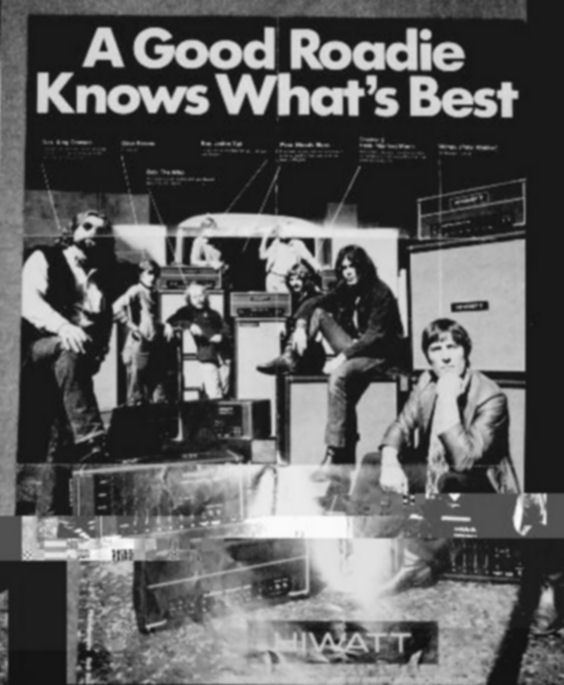
Artists & Roadies: Don't Ruin Your Show by Making the Audience Wait

5 comments


So last evening I went to a concert at a summer festival. Overall the festival and the music was pretty good. It was not LivePA, but my experience from last night made me think about something that has happened to me more than once, and all LivePA artists need to think about.

This experience that I am talking about is me standing waiting for the next act to come on for over an hour!!!! After the first band ended playing, the crowd was very excited for the next band to come on. However, it took over an hour for the next band to setup their gear.

Over an hour!!!!!!

Now this is actually an experience that I have had more than once at several shows and it is something that drives me absolutely crazy. Now it is my personal opinion that there really should be no reason whatsoever that it takes a band over an hour to setup and sound-check. It just kills the crowd. It got so bad last night that the crowd ended up shouting at the stage.

Sometimes I think some of these roadies stretch out the sound-check so they can get in a little self indulgent playing of the instruments themselves on stage. I know we have all seen it before. The roadie on the drum set, starting off hitting the individual drums for the sound-check, but then all of a sudden busting out into a ten minute drum solo of their own.

Really I think there is no excuse. As an artist you or your roadies should be prepared way before the show. You should know how your are going to run your cables, where your setup is going, and if at all possible setup as much gear as you can before hand so all you have to do is plug in when the opening act is done. When people are paying good money for your show, they do not want to wait over and hour to listen to your roadies have fun with your gear.

You owe the audience a little something and you should be prepared to get out there on stage as fast as possible after the opening act is done.

Sunday, August 19, 2007

In search of simple, clean compression.

0 comments


The era of cheap, plentiful technology has provided the modern music producer with an increasingly sophisticated array of bang-for-your-buck, all-in-one modules that tie together many different techologies that, in the past, have remained separate. Mixing boards have acquired built-in hard disk recorders and screens, now calling themselves DAWs, while synths, samplers and ROMplers all became basically the same thing; and the latest in compressor mics sports a built-in power supply, a USB port and a headphone jack in addition to exquisite components and that lustworthy compressor mic sound. However, this ceaseless heaping of technology upon itself isn't neccessarily a good thing; a particularly sad victim, in my opinion, has been the standalone audio compressor.

What started out as an innocuous little box with mysteriously labeled knobs and even more mysterious analogue guts has, during the course of our current technology frenzy, been dissected, emulated, cloned, aped, and just plain ripped off so many times that one can find it in more than one form in just about any kind of setup. Like the distortion pedal before it, the compressor has suffered severe dilution in the never-ending push to cram more things into a smaller space for a lower price, and the resultant dive in overall expectation and quality. In short, while most of them can technically perform the task we refer to as audio compression, most also suck terribly.

A good example of this is called "effect compression", and a good (or terrible, rather) example can be found on the Korg Electribe samplers. While still based on the same mathematical principles as its analogue ancestors, it is a cheap-sounding digital effect that apes real compression only in its barest form, whittling the process down to two knobs that basically control an ugly, brattish pumping noise that is guaranteed to sound like shit in any mix. These sorts of pseudo-compressors are often included by manufacturers as weak additions to fill in ad copy and push up the hype/price machine, usually as one of several dozen equally bad emulated features. In many cases, such as the Roland V-series DAWs, the machine's hardware supports the technical possibility of supporting something that isn't attrocious, but hasty programming usually mangles any potential that may have been there. The same can be said for most of the line's "renowned" guitar amp modeling effects. Unfortunately, a good cross section of the music producing community hasn't seemed to catch on to this sad industry-wide sleight, and continue to mix with the assumption that these features are somehow of a standard quality and fit for studio use. Examples can be found in hardware units like the Roland V-series DAWs, particularly the earlier models, and in any number of VST plugins. Bad compression is everywhere.

On the flip side of the issue, hardware compressors are still around, and can be had new; but like anything, it's a gamble. Units like the Phonic i7200 offer surgical precision, but an ultimately sterile sound. Reputed models like the Gates Sta-Level Tube Compressor guarantee a gateway to mixdown bliss, but only at a price tag that rivals a vacation in Europe. There are software suites available as well, many of them quite good, but again, they come with a price tag coupled with the tedious (and often dubiously legal) task of combing through a sea of weak software with good ad copy in search of a diamond in the rough that costs less than next month's rent. (Raise your hand if you're using pirated software! *whistles*)

After delving into this issue several times over the past few years, the best solution I have come across comes from the folks at FMR Audio, in their RNC1773 unit. Featuring an all-analogue signal path hemmed with digital controls, this little standalone box is everything a classy compressor ought to be. Have a peek at the specs page for all the pertinent details on its I/O and dimensions. Users rave about its clean and "expensive" sound, which is damned odd for a price tag of $199 American. And in contrast to all the Electribe-quality horrible sluge-machine compression effects, the RNC1773 holds up like a trooper even under extreme compression ratios, and even features a switchable "Super Nice" mode for signals with a really wide dynamic range.

In an age where our technology seems to fold in on itself more and more every day, perhaps it's worth it to make room for standalone units like this. Not to mention, I would personally love to see more analog/digital hybrid hardware hit the market. This is one of the boxes that showed up on a metal tour where I was sound tech, and after using it once I immediately felt cheated by every other compressor I have ever used. It's that good.

Friday, August 17, 2007

Korg EM-1: The Forgotten Electribe?

2 comments


When it comes to live performance hardware, the Electribe series has undoubtedly been a fantastic success for Korg. Electribes quite often find their way into LivePA artist's setups because of their ease of use, durability and great hands on tweaking capabilities. What is even more is that they are almost always simple, but extremely effective at what they do.

Now all of Korg's line has seen its share of fanfare and the original electribes are still used a lot, that is except for the EM-1. The EM-1 seems to be the lost child of the group. The EA-1, ES-1 and ER-1 all saw cosmetic/feature upgrades. But the EM-1 did not. Sure it may have been upgraded into the EMX-1, but it would have been nice to see the original EM-1 follow suit with its brethren and get the cosmetic upgrade to a metal case. This little box can be easily had on ebay these days for around $200, sometimes even less. For the price you are getting a pretty good little box. It has a total of 12 parts; 2 synths, 8 percussion, 1 synth accent and 1 percussion accent. It also offers up 11 different effects and an expanded 64 step sequencer. All in all, not a bad little setup.

So if anyone out there is looking for a fun little box to add to their setup perhaps give the EM-1 a look.

Tuesday, June 26, 2007

Rules to Take the Stage By - I Haven't Had My Coffee Yet

2 comments

Rules to Take the Stage By - I Haven't Had My Coffee Yet

I found this interesting post today on Digital Bear's blog, that outlines some of his rules every artist should think about when taking the stage. Just some more positive reinforcement for people out there preparing a show.

I particularly like his points of making sure the audience knows who you are by announcing yourself, and knowing the other acts that you are performing with.

Thursday, May 03, 2007

Create Digital Music: Getting Booked - 10 Basic Tips for Getting Live Electronic Music Gigs

2 comments


Create Digital Music: Getting Booked - 10 Basic Tips for Getting Live Electronic Music Gigs

So there is an interesting post over at Create Digital Music today by Quantazelle where she lists her ten tips for getting booked live. Now, I have known Quantazelle (not personally) for quite a few years now. She is from Chicago, and so am I. I was even a fairly active member on her former web magazine Modsquare.com.

In general I think she has some pretty good, if not obvious, advice for the live artist. As another artist though I think there are some thoughts that I would like to add to respond to this topic.

While most of her advice is pretty sound, I personally totally disagree with her third statement.

3. Make sure that you will avoid dead air.

Now, it is been my sort of personal crusade over the years to try to advocate to people that electronic is more then just dance music. The whole mix set only approach I think unfortunately perpetuates the idea that electronic music is only for dance, and cannot somehow compete on the same level of entertainment as other forms of music. Orbital is one immediately popular live act that succeeded in not performing mix sets.

Another point that I would like make is that the success of your music is largely dependent upon the scene that is in your particular area. Now Chicago IMO has a very strong underground IDM scene. Consequently, Quantazelle and her label is IDM based, and I think a large amount of the success one has is based upon the scene of your city.

As one might expect if your scene is strong in trance, and you are a trance artist, the promoters, the artists and contacts will naturally be more prevalent for you.

Overall however, the advice is a great starting point, but I think all the budding artists out there should keep in mind the fact that sometimes there is no scene, especially if your sound is off the beaten path such as ambient, noise or experimental, or if you live in "Bumble". I would also like to say however, that sometimes success comes not from working the traditional paths of promoters, and the dance music scene.

Sometimes the off beaten and ingenious artists are the ones who really strike it hot. For example, I have gotten at least three gigs through Myspace. I am sure there are artists who are more create then me out there as well.

For further reading be sure to check out the LivePA Blog's LivePA Getting Started Guide

Tuesday, April 17, 2007

The Death of the Groovebox?

4 comments


.:LivePA.org: The Death of the Groovebox:.

User Mitch over at the LivePA boards was keen enough to notice that Korg has removed their EA-1 and ER-1 from the main product page. Does this mean that with the demise of the eletribe series we are finally seeeing the end of the Groovebox for good? Sure there are still the MPC's, the higher end EMX/ESX, and more, but gone it seems is the era of the "every man" affordable peice of kit.

Now personally I am a huge fan of grooveboxes because of their affordability, ease of use, and ability to create music quickly. It perhaps leaves us as artists wondering where exactly music is going doesn't it?

Now there may be readers out there who have never really gotten into the Groovebox. Perhaps you grew up with just the laptop, or think of them as cheap, useless gear. But for others out there, particularly the artists who were making music in the 90's in their bedroom, the groovebox may have been a cornerstone of your live setup. The MC-303, as pitiful as its features look today, in many respects helped to define some music back in the early ninties.

So what do the readers out there think? Are you a fan of the Groovebox? Has the $500 laptop and ability to warez software killed it? What does the future hold for the Groovebox, if any?


R.I.P to the Grooveboxes
Roland MC-303
Roland MC-505
Korg EA-1
Korg ER-1
Korg ES-1
Ensoniq ASR-X
Yamaha LoopFactory

Monday, March 05, 2007

Techno Has Reached It's Limits: The Negative Effect Of Software Limiting In Techno Music

1 comments

.:Techno Has Reached It's Limits: The Negative Effect Of Software Limiting In Techno Music:.

Here is a very interesting article from Blackout Audio which talks about how electronic artists are way to dependant upon the use of limiting in their music. The result, is extremely "hot" music that lacks any sort of dynamics or progression. Personally I think the author is spot on in this article, and I find all too from artists tracks that I listen to that in your face radio sounds has taken over so much music. I wonder though if this is not only a product of just techno music, but the introduction of software as the main form of creation.

Back in the early nineties, a well mastered album set at a good level could be averaging -12 to -14 db rms, and still peaking at zero db. What this effectively meant was the main body of the music (the rms level, and our perceived loudness of the track ) would be sitting at -12db, with 12db of headroom available for kicks and snares, drops and builds to provide the dynamic impact, colour and interest...Slowly the rms levels have been coming up and up since the first software limiters were introduced, (regularly to -5db rms or so on some techno mixes that arrive here) meaning there is now nowhere for the kick drum to go, except head first into a brickwall limiter, barely louder than the body of the track.


From a Live standpoint what are you LivePA'ers out there doing? I have seen on the .:LivePA.org:. board the issue of limiters come up several times, and the discussion of sounding "pro" or "mastered" is often an issue. Has the club or live environment mandated that we have the constant driving in your face sound?

I for one almost never use limiting, and only use a very little bit of compression on my tracks after recording, whether it ends up being a live or studio recording. This is using hardware, and ironically enough when I was a software musician I used to compress the heck out of my tracks. It is fair to say that my tracks sound much livelier now because of my toned down use of effects in general.

Lets hear your thoughts on this one.

Tuesday, January 09, 2007

Are We There Yet? The Computer and Music Production

1 comments

Over the past fifteen or twenty years the rise and development of the computer in the music production field is been quite remarkable. Any of the musicians out there reading this can pretty much attest to the fact that the computer these days can do just about anything in music production. I would even be willing to wager that if you are a musician like me, in their twenties, your probably started your production out in an all software environment, rather then working with hardware first.

Through much of this convergence of software as the preferred domain of music production there has always been this notion that the computer just isn't "there yet" in regards to processing power and capability to completely replace the studio. It seems however that about four or maybe five years ago we may have hit and just surpassed our mark of the computer being "there". Perhaps the important point is not that we have made it "there" in the processing field, but within the last two or three years we have made it “there” in the price field as well. The prevalence of the $400 desktop computer and the $600 laptop is pretty remarkable these days. Now, while these machines might be on the lower power end of many computer systems in the higher price range, they are remarkably powerful. The rate at which computing technology is progressing is so fast, that these $400 computer systems are just as powerful as the $2000 computer systems that were around just a couple of years ago. Just five years ago I was using an IBM 450Mhz computer doing music production quite happily. I know find myself sitting here with a 2.0 Ghz Core Duo laptop.

It seems then for all practical purposes, picking up a cheap Celeron processor computer at your local Best Buy can get you up and running these days to run a surprisingly hefty software studio environment. The question then begs us to consider, "Are we finally there?"

As I look at the music world today I really have trouble trying to come up with ways in which I can say we are not there. When even the most basic of computers can run Absynth, Vaz Modular and others how can we say we are not there? So lets just suppose for a moment that we are all in agreement that we are there. Sure there are the arguments out there that the computer cannot do everything, but for 99% of the musicians needs out there, even the most basic store bought computer can effectively get you making music.

Where exactly do we go from here? I don't plan to turn this into one of those will software replace hardware debates, because there are innumerable arguments out there for why hardware will remain to be relevant, but where do we go in the next five, ten or fifteen years for software development for computer music production? Do we just continue to make prettier looking software that runs on faster and faster machines? What levels of innovation and new standards can come out of the next generation of music software?

Based on my observations here are some of the thoughts that I have on where computer software can go in the next generation with respect to development.

1. Convergence: Convergence is one of those terms that has been floating around in the technology world for about ten years. Convergence is the combination of technologies into a single package. Cell phones and
cameras are a prime example of convergence success, but most attempts at convergence generally fail because the end product is not particularly good at either thing that it does. The Sony PSP rings a bell there. Convergence on the music production field has a lot to grow on in the next few years. In some ways we are beginning to see beginnings of convergence with the inclusion of video editing and playback in many of the software studios. Ableton Live appears to be developing nicely from a live performance tool to a full featured software studio that can do live performance. The idea of convergence however can really be expanded to a lot of other media forms in software production beyond what might be initially thought. Apple's Garageband implemented podcasting features extremely well and leaves some doors open for the possibilities of all sorts of new media production and publishing. The Web2.0 phenomenon is taking off and it would not surprise me if we begin to see publishing and collaboration tools begin to make their way into more and more software studios. One touch publishing/export of a track to a website or publisher would be exciting, and even more so would be the inclusion of networking capabilities in software allowing for people to remotely and jointly collaborate on tracks from miles apart.

2. New Methods of Synthesis: One of the areas that I think the new computer platforms can excel at in the next generation is new methods of synthesis. There will always be the strong staple of subtractive synthesizers out there, but I hope to see some really creative and new things beyond just hybrids come along. The use and popularity of granular synthesis has largely taken off because of computers, but how about something new that blows our minds? FM synthesis that uses more then just sine waves would be neat. How about something else that I can't even imagine, or for example develop something that is simply impossible to do on hardware? Csound on their website touts how you can make a 3,000 oscillator synthesizer with a 9,000 stage envelope if you wanted. That is great, but putting that into a usable environment that general musicians can use is something that would be great to see down the pipe line.

3. Freeware and Open-Source Platforms:
Perhaps the biggest winner in this entire software development platform is the musician. Never before have the tools to make music been more affordable and been as numerous. The past generation Windows really won I think offering more software then really anything else around. Not to mention on top of that, is that there were plenty of freeware production suites that got people up and making music. The increase of cheaper and cheaper computers I think will open up opportunities for new and younger software designers. Everyone's brain works a little differently, and it will be great to see some radically new and different ideas for the software studio in the next few years. In the past years software like Reason, Ableton Live, Aodix, and Bidule changed the way people made music. Along with the new forms of synthesis new ways of making music is important.

So now that we have reach the place where computing power has reached the pinnacle, where do you think it should go from here? How will increased processing power impact the way you make music and how would you like to see it impact the way you create music?